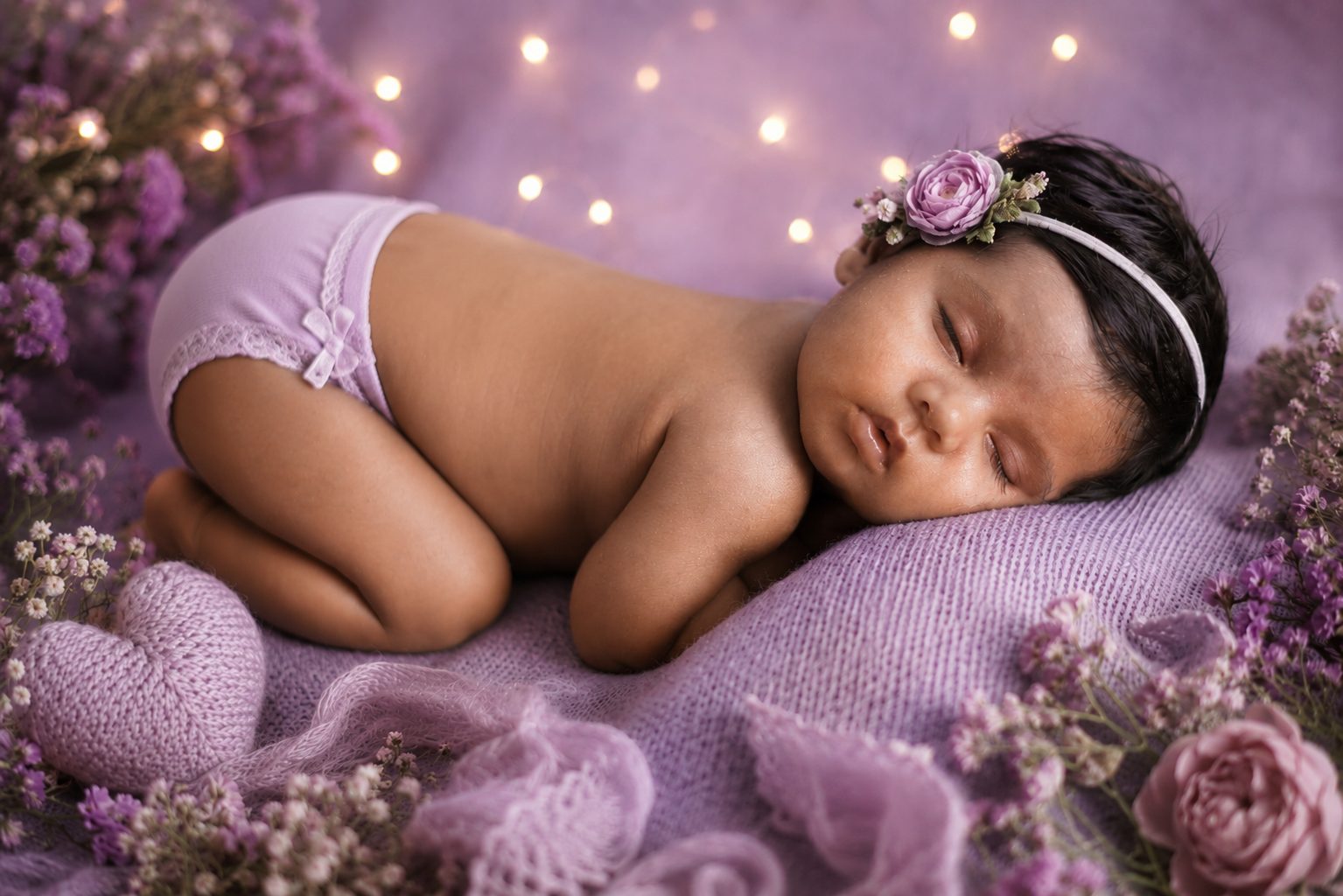
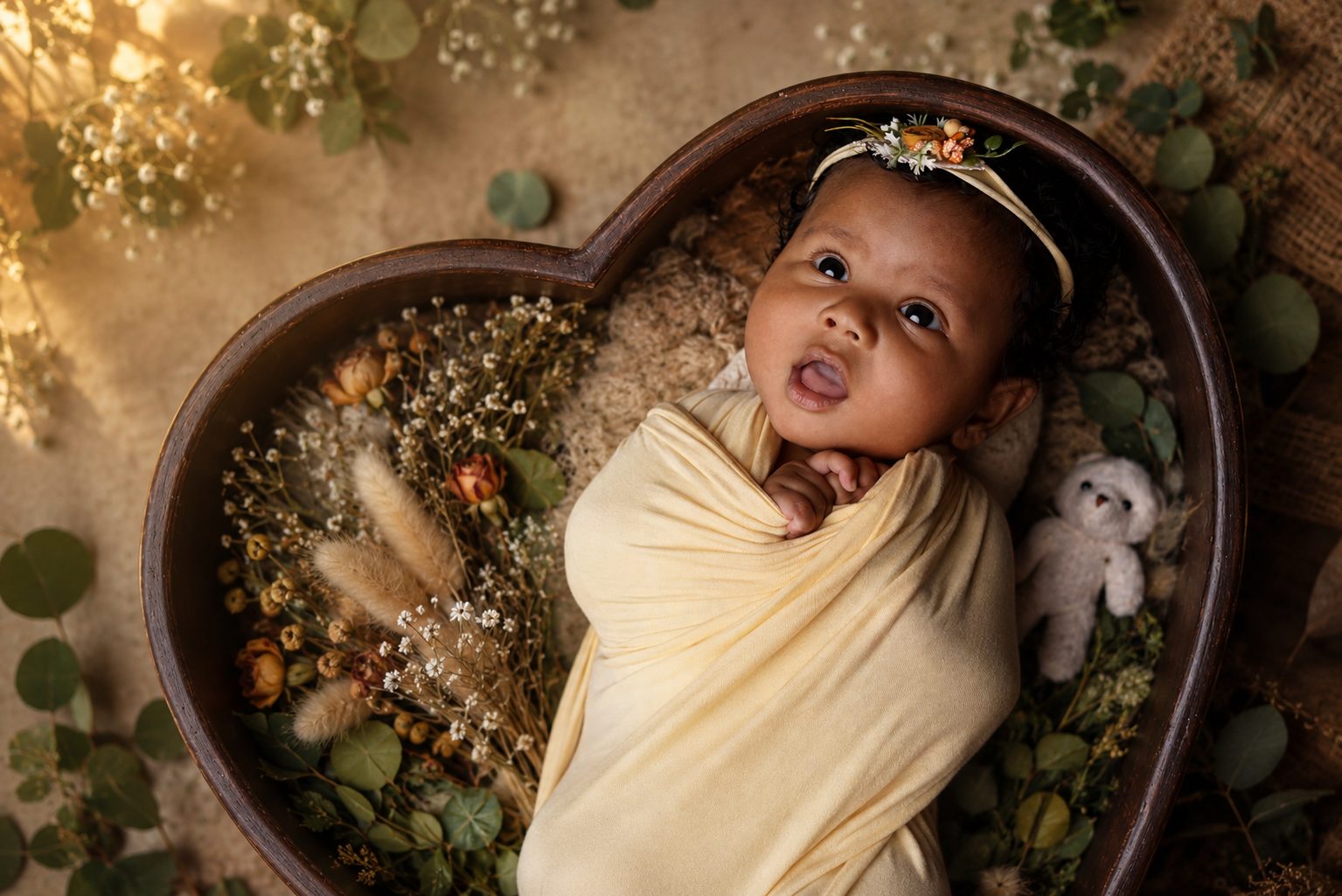
For most parents, the first question about newborn photography isn’t about poses or props — it’s simpler than that: is this actually safe for my baby? It’s a fair question, and a good one to ask before booking anyone. This guide walks through how safety works in newborn photography generally, what’s genuinely standard practice, and what you can reasonably expect from a session at home in Dubai.
Why Safety Comes Before Any Pose
The soft, curled poses associated with newborn photography look effortless in a finished photo, but they’re built on a simple priority order: the baby’s comfort and safety come first, and the shot comes second. A pose that requires a baby to be tense, cold, or unsupported isn’t one a careful photographer will pursue, no matter how it might look in someone else’s portfolio.
A few principles are widely accepted across the newborn photography industry, regardless of who’s holding the camera: a baby’s airway should always stay clear and their face visible, a baby should never be left elevated or unsupported even briefly, and any pose that requires real strain — rather than a baby simply curling naturally — generally isn’t attempted at all. These aren’t exotic rules; they’re closer to common sense once you think about what’s actually happening during a pose.
At MG Photography UAE, this shows up in a straightforward way: every pose we use is one that keeps baby safe and supported at all times — nothing is ever left unsupported, and comfort takes priority over any individual shot. If a particular setup isn’t working for your baby on the day, the pose gets adjusted or skipped, not forced.
Spotting and Support During Posed Shots
“Spotting” is the general term for how a photographer (or a parent, depending on the setup) keeps a hand close to or on a baby throughout a pose — close enough to react instantly, even in poses that look hands-free in the final, cropped photograph. It’s one of the most important, least visible parts of newborn photography, and it’s the reason many of the more elaborate-looking poses are safe in practice even though they’d be risky if a baby were genuinely left alone.
This is also the area where it matters most to ask a photographer directly how they work, rather than assuming — practices genuinely vary between photographers, and a reputable one will be glad to explain theirs.
At MG Photography UAE, support during posing centres on two things: proper equipment and an extra pair of hands. For many poses, we use dedicated half-moon-shaped newborn posing supports — often called “posing beans” — placed beneath the wrap or blanket to cradle and stabilise baby’s position from below, rather than relying on props alone to hold a pose. Alongside that, we ask one family member to sit close to the setup throughout, and our assistant gives them simple, clear guidance on how to help keep things safe and steady around the baby. Support isn’t something that happens off to the side — it’s part of how every pose is actually built.
If you’re planning a session, this is a reasonable thing to ask about directly — see our newborn photography sessions in Dubai for more on how we work.
Baby Comfort During the Session
Safety and comfort go hand in hand for newborns — an uncomfortable baby is also a harder baby to photograph safely, since discomfort is often what leads to a squirm or startle mid-pose. A few basics matter more than they might seem:
- Room temperature. Newborns are photographed in minimal clothing for many poses, so the room needs to be noticeably warmer than a typical home — we recommend it’s pre-warmed to around 25–27°C before a session starts.
- A full, settled baby. A baby who has just fed and is naturally sleepy is far easier — and safer — to pose gently than one who is hungry or overstimulated.
- A calm, familiar environment. Because MG Photography sessions happen at your home rather than in an unfamiliar studio, your baby is in their own space throughout, with no car journey or new environment to adjust to on top of the session itself.
Sessions typically run 2–3 hours, which allows time for feeding, changing, and settling between setups rather than rushing from one pose to the next.
When a Pose or Approach Should Change
No pose is worth pushing through if a baby is telling you — through crying, squirming, or simply not settling — that it isn’t working right now. A newborn session should never feel like something is being forced to happen on schedule.
In practice, this means: if your baby seems unsettled during a particular setup, we simply move on to the next one. There’s no fixed script that has to be completed in order, and a pose can always be revisited later in the session once baby has settled again.
What Parents Can Expect During a Newborn Session
Knowing roughly what a session looks like in advance tends to put parents more at ease than any specific safety detail does. At MG Photography UAE, that looks like: our team arrives with a full home-studio setup — backdrops, wraps, props, and lighting — so there’s nothing for you to source or set up in advance. We work within a single warm, quiet room of your choosing, and the session is paced around your baby’s feeding and sleep rhythm rather than a fixed shot list that has to be completed regardless.
Many newborn photographers also welcome parents staying close throughout — it’s worth asking about directly if it matters to you, since practices do vary. If you’d rather step out for a coffee while your baby is settled and sleeping, that’s usually fine too; either way, you’re never far from the room.
How Parents Can Prepare for a Calm, Safe Session
A little preparation goes further than most parents expect:
- Feed your baby as close to the session start time as is practical — a full baby settles faster.
- Pick one warm, quiet room with a power outlet nearby; that’s genuinely all the space a home session needs.
- Keep any sentimental items you’d like included — a hospital bracelet, a family blanket — ready to hand over.
- Don’t feel pressure to deep-clean the house or buy new outfits. A professional newborn photographer brings their own backdrops, wraps, and props specifically so you don’t have to.
Questions Parents Can Ask a Newborn Photographer
Because newborn photography safety practices genuinely differ between photographers, asking a few direct questions before booking is one of the most useful things you can do as a parent:
- How do you support or spot a baby during posed shots?
- What happens if my baby won’t settle or seems distressed during the session?
- Have you photographed newborns before, and can I see full, unedited galleries — not just highlight shots?
- Is the session paced around my baby, or built around a fixed list of poses?
A photographer who answers these clearly and specifically — rather than vaguely — is generally a good sign.
A Calm, Safe Start
Newborn photography doesn’t need to feel like a trade-off between beautiful images and a safe, calm experience for your baby — the two are meant to go together. If you’re planning a session in Dubai and want to understand more about how a home visit actually works from start to finish, our complete newborn photography guide walks through timing, preparation, and what to expect in full. Or reach out any time to talk through your questions before you book.